


Mahjong Master Path to Harmony
Gimica GmbH
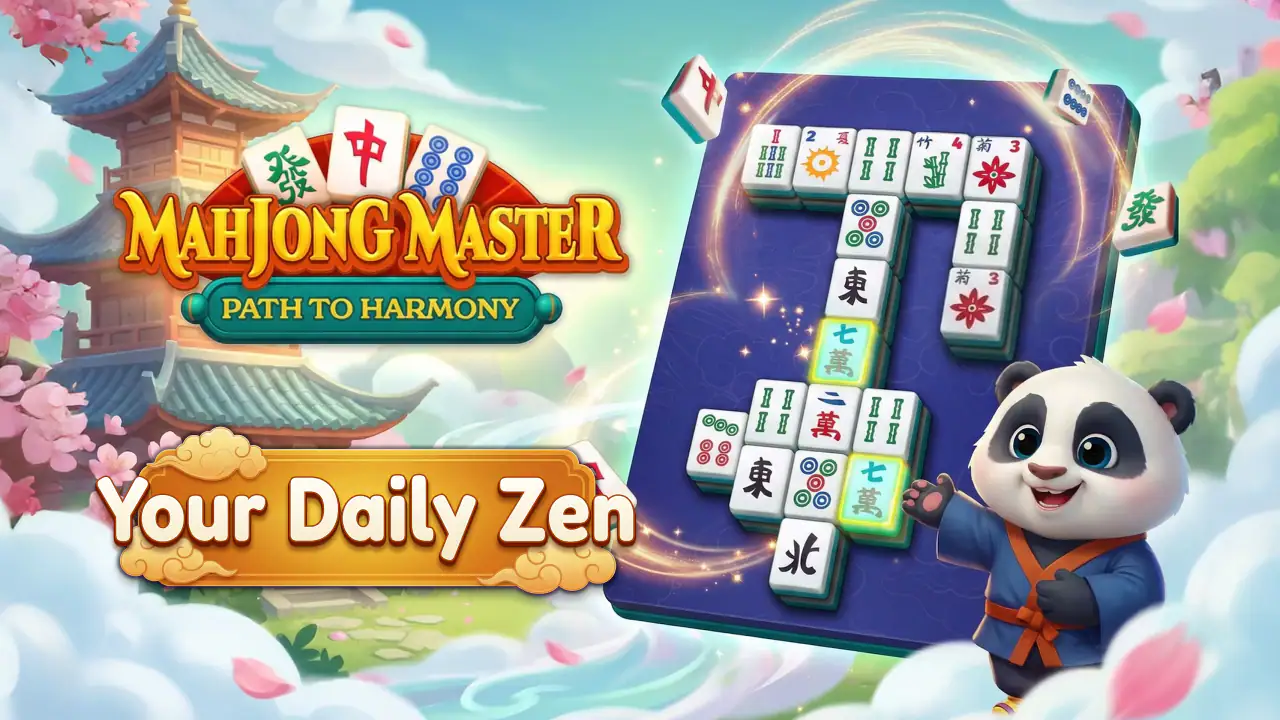
I spent time with Mahjong Master Path to Harmony as a light casual game, and my first impression was easy to understand: it is built for the kind of player who wants a calm puzzle break rather than a demanding contest. The familiar mahjong tile-matching idea gives it an approachable starting point, while the adventure framing makes each short session feel a little more purposeful than opening an entirely plain puzzle board.
That distinction matters. A relaxing game can be pleasant for a week and then disappear from your phone once the initial curiosity fades. My real question was whether this title could become a repeatable habit without turning into another chore, especially for someone who already has several casual games competing for attention. In my experience, its strongest case is not intense challenge or deep strategy. It is the simple routine of opening the game, settling into a board, and giving your attention one manageable task.
The game comes from Gimica GmbH and is available free of charge, with optional purchases ranging from $2.49 to $46.99 per item. It is rated for Everyone, which matches the accessible nature of the experience. The current version is 1.1.1 and it runs on Android 7.0 or later, so people using older compatible phones are not automatically excluded. Its average rating is 4.0 from around 321 ratings, and the game has passed 100K installs, suggesting that the basic idea has found a real audience without making the title feel overwhelming or difficult to approach.
Why the first week feels so inviting
The opening appeal comes from how quickly the game communicates its purpose. You do not need a long explanation to understand what you are trying to do on a board: identify matching tiles, clear them in a sensible order, and avoid blocking the combinations you may need later. That familiar foundation lets the adventure presentation do its job without forcing me to learn an elaborate rule set before I can enjoy a round.
I found that especially useful during short gaps in the day. A few minutes before leaving home, a quiet break after lunch, or the period when I wanted something gentler than social media all suited the game. It does not demand the same mental preparation as a competitive puzzle title. I could begin with a relaxed mindset, make progress, and stop before the session became a commitment.
Related News






The first-week experience also benefits from the emotional tone suggested by the Path to Harmony name. I approached it expecting a soothing variation on mahjong rather than a race against a timer or a punishing test of precision. That expectation is important, because the game works best when you let it remain a small ritual. If you are looking for a dramatic adventure with constant surprises, the calm presentation may feel too restrained. If you want a board game atmosphere without setting up physical tiles, it is much easier to appreciate.
My most useful early habit was to slow down before making the obvious match. In tile-matching games, the first available pair is not always the best pair. Clearing a tile can expose another choice, but it can also remove the piece that keeps a future match available. I started scanning the upper layers and the edges first, then choosing moves that opened more of the board. That small change made the puzzles feel more thoughtful without making them stressful.
Another practical tip is to treat a board as a sequence of openings rather than a collection of isolated pairs. When several matches are available, I look for the move that reveals the most new information. This is more valuable than chasing a visually attractive pair, because a newly uncovered section can change the entire order of play. The game is still casual, but that approach gives experienced puzzle players a reason to stay mentally present.
Gallery
Free access makes trying it straightforward, although the presence of in-app purchases is worth keeping in mind from the beginning. I would not install it assuming that every player will have the same completely frictionless experience over time. Anyone who is sensitive to optional spending should decide in advance whether this is a game for occasional play or one they are willing to support financially. That boundary is easier to maintain when it is set before the game becomes part of a daily routine.
What makes the routine work beyond novelty
After the first few sessions, the main question changes from “Is this pleasant?” to “What brings me back?” For me, the answer is the low effort required to restart. I do not need to remember a complicated story, rebuild a strategy deck, or coordinate with another player. The game is ready for a quiet solo session, which gives it a useful place beside more energetic casual alternatives.
That convenience creates a good use case for people who want a screen activity that occupies their hands and attention without filling the room with noise or pressure. I can imagine using it while waiting for an appointment, during a commute when playing safely is possible, or at home when I want to wind down without beginning a long-form game. It is also a reasonable option for households looking for an Everyone-rated puzzle that is easy to explain.
Still, ease of entry is not the same as lasting depth. Mahjong Master Path to Harmony has to rely on the satisfaction of solving boards and the surrounding sense of progress. Players who need a strong competitive ladder, constant social interaction, or a large range of radically different mechanics may find the experience too narrow once the central matching pattern becomes familiar.
Compared with a traditional mahjong app, this game feels more like a guided casual journey than a digital replacement for sitting at a table with other players. That makes it better for solitary relaxation, but less suitable if your main goal is to practice a full competitive mahjong ruleset. Compared with general match-three games, it rewards planning around tile access instead of rapid color combinations. Compared with word puzzles, it asks for visual scanning and sequencing rather than vocabulary recall. Those differences are useful when choosing where it belongs in your rotation.
One of the less obvious strengths is that the same board can support different moods. I can play quickly when the layout is straightforward, or I can turn a more layered board into a small concentration exercise. I do not have to approach every session with the same intensity. That flexibility helps the game survive beyond the first-week novelty, because it can fill both a two-minute gap and a longer quiet break.
On the other hand, this flexibility can expose a weakness. If I am tired, I may make careless choices and lose the feeling of control that makes a relaxing puzzle appealing. If I am fully alert and looking for a demanding challenge, the casual structure may not push me far enough. The game sits between those extremes, and its value depends heavily on whether that middle ground matches your habits.
How much attention it asks from a regular player
The maintenance burden is relatively low in the practical sense: there is no collection of physical pieces to organize, no multiplayer schedule to maintain, and no complicated setup before a session. I can put it down for several days and return without feeling that I have fallen behind a group or missed an essential event. That is a meaningful advantage over many mobile games that turn regular play into an obligation.
There is also a mental maintenance question. To keep enjoying a tile-matching game, I need to vary how I play rather than rush through every board. I sometimes focus on opening blocked areas first; at other times, I prioritize preserving several possible matches. This self-imposed variation is not a separate mode, but it helps prevent the central action from becoming automatic. Players who prefer the game to provide constant new systems may see that as extra work.
For a realistic everyday scenario, imagine finishing dinner with fifteen quiet minutes before the rest of the evening begins. A competitive game might leave you wanting one more round, while a story-heavy title may be awkward to pause. This game fits the gap better: I can play a focused board, stop when my attention starts to wander, and return later without needing to reconstruct a complicated situation. That makes it more compatible with ordinary routines than games that punish interruption.
It is also worth considering the phone itself. Because the game supports Android devices from version 7.0 onward, it is accessible to people who have not upgraded recently. That broad compatibility is helpful for a secondary phone or an older family device. At the same time, a player choosing a game specifically for the newest visual effects or the most technically ambitious presentation should look elsewhere. The appeal here is the puzzle ritual, not showing off hardware.
The purchase structure is the main maintenance issue I would watch over a longer period. Free entry lowers the risk of trying the game, but optional items can change how comfortable the ongoing experience feels for different players. I recommend treating purchases as a deliberate choice rather than part of the normal rhythm. If you want an entirely fixed-cost experience with no temptation to spend, a paid puzzle or a simpler offline title may be a better match.
Where repetition begins to show
The biggest source of fatigue is not that the basic mechanic is poor; it is that the mechanic is clear enough to become familiar quickly. Once I understand the visual language of the boards, the pleasure depends on how well the progression keeps giving me a reason to solve one more. Without a strong personal goal, a session can start to feel like repeating the same gesture pattern.
This is where the adventure identity has to carry more weight than a bare tile board. I enjoy having a sense of movement through a themed experience, but the long-term effect depends on whether that sense of movement remains meaningful to me. A player who enjoys calm repetition may be satisfied with the routine itself. Someone who needs frequent mechanical surprises may notice the limits sooner.
Fatigue can also come from playing at the wrong time. I would not choose it when I want a fast reaction challenge, a story I can become emotionally invested in, or a social game that gives me something to discuss with friends. I would also skip it when I am already impatient, because a relaxed tile puzzle cannot compensate for a mood that wants speed. Knowing that limitation makes the recommendation more honest.
There is a useful trade-off between accessibility and complexity. The Everyone rating and straightforward tile logic make the game approachable for a wide audience, but the same simplicity may reduce its appeal to expert puzzle players. I would recommend it to a casual player who values calm concentration before I recommended it to someone searching for deep mahjong strategy. The latter may prefer a rules-focused mahjong game, while the former is more likely to appreciate the low-pressure structure.
My advice for avoiding burnout is to use it as one tool in a broader routine rather than making it the only game on your phone. Short, intentional sessions work better than forcing a long play period. I also find it more satisfying when I stop after a natural sense of completion instead of continuing simply because another board is available. That approach protects the relaxing quality that first made the game appealing.
Who should keep it installed
I think this game earns lasting space for a particular kind of player: someone who wants a free casual puzzle, prefers solo play, enjoys mahjong-style tile matching, and values a peaceful activity that can be picked up without preparation. It is especially suitable if you like visual organization, gradual decision-making, and games that can fit around an unpredictable day.
It is less convincing for players who measure value by endless variety, high difficulty, or a strong social layer. If your favorite casual games are built around rapid rounds, competitive rankings, or constant new mechanics, this may feel too quiet after the initial attraction. Likewise, anyone who dislikes optional purchase systems should approach carefully and decide how strictly they want to limit spending.
The game’s audience size gives it some reassurance: it has more than 100K installs, while its 4.0 average from around 321 ratings suggests a generally positive but not universally enthusiastic response. I read that combination as a sign of a competent, accessible casual title rather than an essential game for everyone. It is popular enough to be worth trying, but the moderate score also supports keeping expectations realistic.
For me, the strongest long-term test is whether I can describe a reason to open it that is not simply “I have nothing else to do.” In this case, the reason is a quiet reset. When I want to focus on a tidy visual problem and avoid the pressure of a timer, another player, or a demanding narrative, it has a clear role. That role is modest, but modest games can remain useful when they fit real routines.
The developer, Gimica GmbH, has positioned the title in the casual space rather than presenting it as a specialist mahjong simulation. I think that is the right way to judge it. Its success does not depend on replacing every other puzzle game; it depends on offering a comfortable alternative when I want familiar tile logic wrapped in a more guided, relaxing package.
My final view is favorable, with a clear condition: Mahjong Master Path to Harmony is worth keeping when calm repetition is a feature, not a flaw. I would recommend installing it for gentle solo sessions and seeing whether its board-solving rhythm becomes part of your day. I would not recommend it as your only mobile game if you need constant novelty, deep competitive systems, or a completely purchase-free environment.
After the novelty fades, the title survives on habit rather than spectacle. Its low entry barrier, Everyone rating, broad Android compatibility, and free starting point make that habit easy to test. The lasting value comes from using it intentionally: play when you want a small mental reset, vary your approach to the boards, and stop before relaxation turns into repetition. For the right player, that is enough to give this casual mahjong adventure a permanent, useful place on the phone.
FAQs for Mahjong Master Path to Harmony
What is Mahjong Master: Path to Harmony?
Mahjong Master: Path to Harmony is a relaxing tile-matching puzzle game built around traditional mahjong solitaire mechanics. Players clear the board by finding and matching identical, available tiles. The game combines calm visual themes, progressive levels, and a peaceful atmosphere, making it suitable for short sessions or longer play periods when you want a casual challenge without complicated controls.
How do you play Mahjong Master: Path to Harmony?
The main objective is to remove all tiles from each layout by matching two identical tiles that are free to select. A tile is generally available when it is not covered and has an open side. As the stages become more difficult, you need to plan your moves carefully, recognize blocked combinations, and avoid removing tiles that could prevent access to important pairs later in the level.
Is Mahjong Master: Path to Harmony free to download and play?
The game can generally be downloaded at no initial cost, allowing players to try its core mahjong puzzles before deciding whether to make optional purchases. Depending on the version and platform, advertisements, extra hints, boosters, or other in-game items may be offered. It is advisable to check the store listing for the current pricing, advertising policy, and available purchases before installing.
Does the game require an internet connection?
Some features of Mahjong Master: Path to Harmony may work without a continuous internet connection, which is useful for playing during travel or when mobile data is unavailable. However, online access may still be needed for downloading updates, displaying advertisements, synchronizing progress, restoring purchases, or accessing special events. Offline behavior can vary between Android and iOS versions, so check the latest store description.
Who would enjoy Mahjong Master: Path to Harmony?
This game is a good choice for players who enjoy tile-matching puzzles, traditional mahjong solitaire, and calm, low-pressure gameplay. It can appeal to beginners because the basic rules are easy to understand, while later layouts provide more strategic depth. Players looking for fast action, competitive multiplayer, or highly complex role-playing systems may find the experience too quiet and repetitive.
Pros
- Relaxing tile-matching gameplay suitable for short sessions.
- Clear visuals make tile patterns easy to recognize.
- Progression system gives regular goals to work toward.
- Works well for players who enjoy calm
- puzzle-focused experiences.
- Simple controls are accessible for beginners and casual players.
Cons
- Some levels may feel repetitive after extended play.
- Later puzzles can become difficult without careful planning.
- Hints or boosts may be limited and encourage extra grinding.
- The game may not appeal to players seeking fast-paced action.
- Progress can feel slower for users who avoid optional purchases.


